7 Iconic Egyptian Easter Foods: Sham El Nessim Traditions
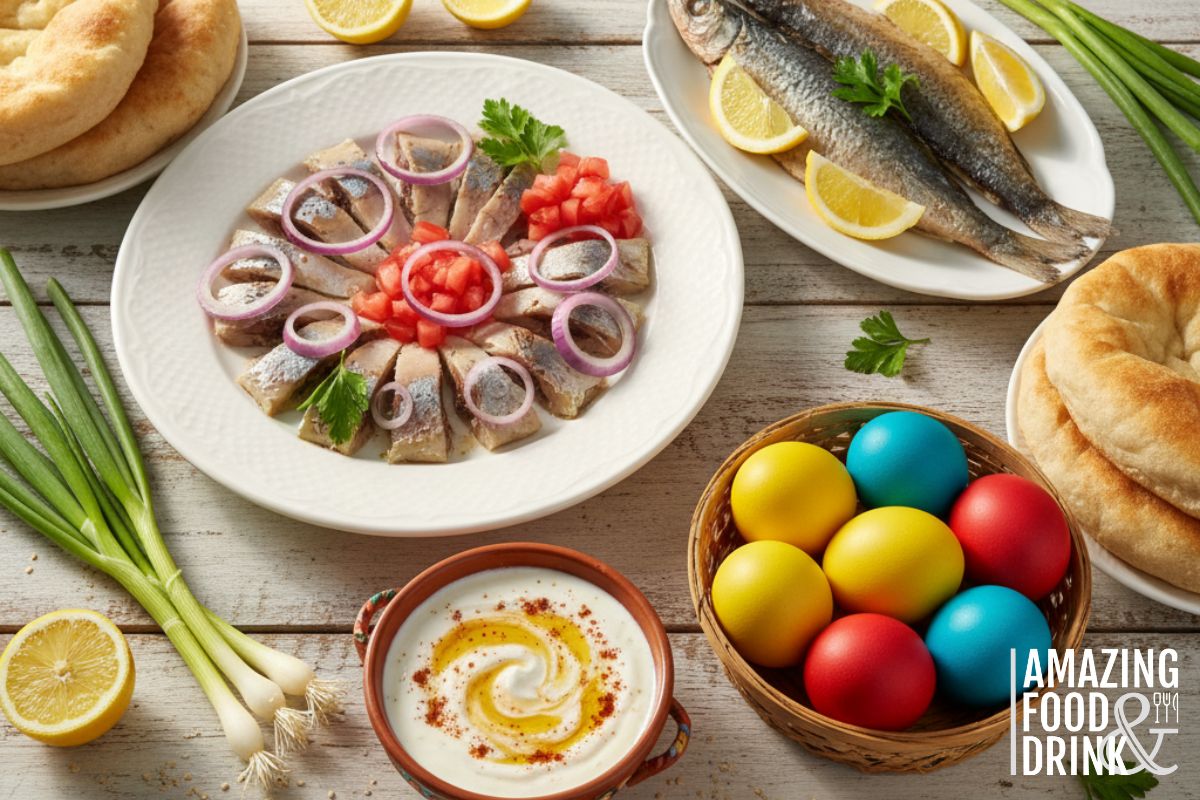
Egyptian Easter foods are unlike any other celebration worldwide. Known as Sham El Nessim, Egypt’s ancient spring festival centres around salted fish, coloured eggs, and outdoor feasting traditions dating back over 4,500 years to the Pharaonic era.
These seven Egyptian Easter foods offer a fascinating glimpse into one of the world’s oldest continuous food traditions. They connect modern celebrations to the time when pharaohs ruled the Nile Valley.
Whether you’re planning to celebrate Sham El Nessim or simply curious about Egyptian food culture, these traditional dishes reveal how ancient customs continue to thrive in contemporary Egypt.
Table of Contents
What is Sham El Nessim? Egypt’s Ancient Easter Celebration
Understanding this Egyptian spring festival reveals why Egyptian Easter foods have remained beloved for millennia.
Sham El Nessim literally translates to “inhaling the breeze,” perfectly capturing the joy of emerging from winter to embrace spring outdoors. This celebration always falls on the Monday following Coptic Easter Sunday, making it a movable feast. Whilst Easter carries Christian significance, Sham El Nessim transcends religious boundaries. Muslims, Christians, and people of all backgrounds participate equally, making it one of Egypt’s most unifying celebrations, featuring distinctive Egyptian Easter foods.
Ancient Egyptian Origins
The roots of this Egyptian Easter tradition stretch back to Ancient Egypt’s Feast of Shemu (or Shmo), meaning “the revival of life” or “harvest season.” Ancient Egyptians marked this day by observing the sun’s alignment with the Great Pyramids, signalling spring’s official arrival. “Shemu” is the ancient Egyptian name for the season and festival, which later became “Shmo” in Coptic and then evolved into “Sham El Nessim” in Arabic. The Egyptian Easter foods consumed during this celebration have endured through millennia, passed down through generations as cherished culinary heritage connecting us to Pharaonic traditions.
When is Sham El Nessim Celebrated in 2026?
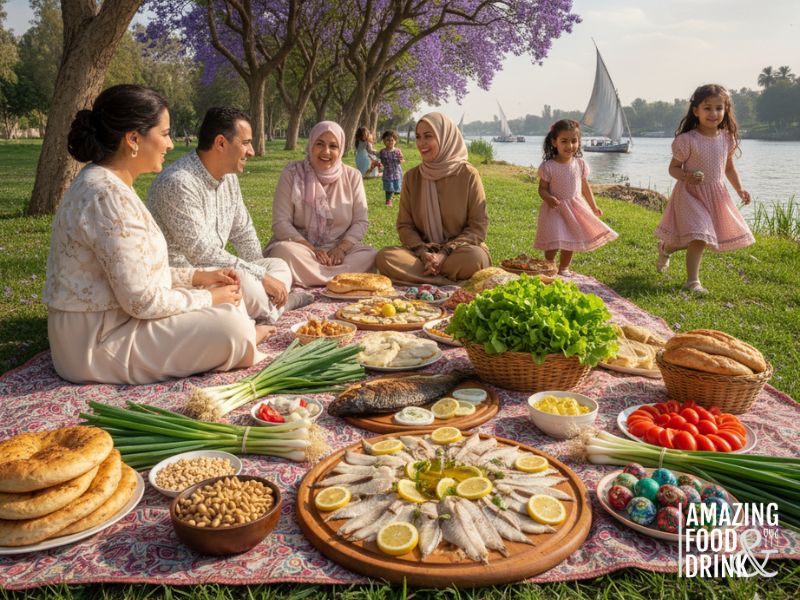
For those planning to experience authentic Egyptian Easter foods, Sham El Nessim in 2026 falls on Monday, 13th April. Celebrations typically begin at dawn, with families gathering in parks, gardens, and along the Nile to enjoy traditional dishes whilst breathing in spring’s fresh air.
Why Do Egyptians Eat These Specific Easter Foods?
Each traditional Egyptian dish served during Sham El Nessim carries deep historical and symbolic significance.
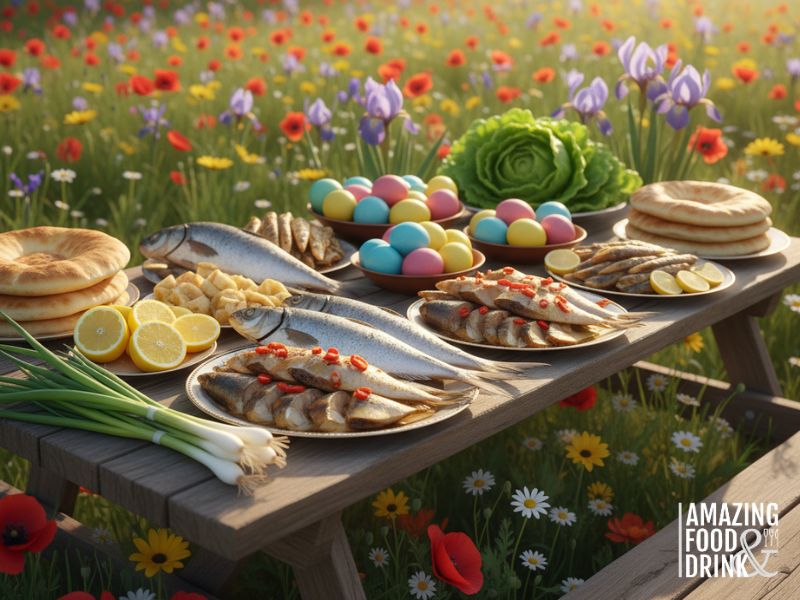
The connection between Egyptian Easter foods and ancient traditions isn’t coincidental. Each dish, from heavily salted fish to vibrantly coloured eggs, held a specific meaning in Pharaonic culture. Ancient Egyptians believed these foods promoted health, fertility, and protection against seasonal illness. Salted fish became staples because spring coincided with the Nile’s flooding season, when fish were exceptionally abundant. Eggs symbolised creation and rebirth concepts central to Ancient Egyptian religious beliefs that have seamlessly transferred to modern celebrations.
7 Traditional Egyptian Easter Foods You Must Try
From ancient Pharaonic delicacies to symbolic accompaniments, these Egyptian Easter foods define the authentic Sham El Nessim experience.
1. Feseekh (Salted Mullet Fish)
This heavily salted mullet fish represents the most iconic of all Egyptian Easter foods. Feseekh reigns supreme amongst Egyptian Easter foods, earning its crown through millennia of tradition. Preparation begins approximately one month before Easter, when fresh grey mullet is gutted, generously packed in sea salt, and stored in sealed containers. The salt slowly ferments the fish through a preservation process perfected over thousands of years. By Sham El Nessim, the fish develops its characteristic nutty, intensely savoury flavour and pungent aroma.
The taste divides opinion dramatically. Devotees describe feseekh as rich and complex, whilst sceptics find it overwhelmingly bitter. Feseekh has remained the king of traditional Egyptian dishes since Pharaonic times, when the Nile’s spring floods brought abundant mullet catches, establishing its direct connection to Ancient Egypt’s Feast of Shemu.
Serving tradition: Feseekh is typically deboned, broken into chunks, and served with lemon juice, olive oil, and copious green onions. The sharp crunch of raw onions perfectly balances the fish’s intense saltiness.
Safety note: Only purchase feseekh from reputable, licensed vendors, as improper preparation can cause serious illness (botulism).
2. Renga (Smoked Herring)
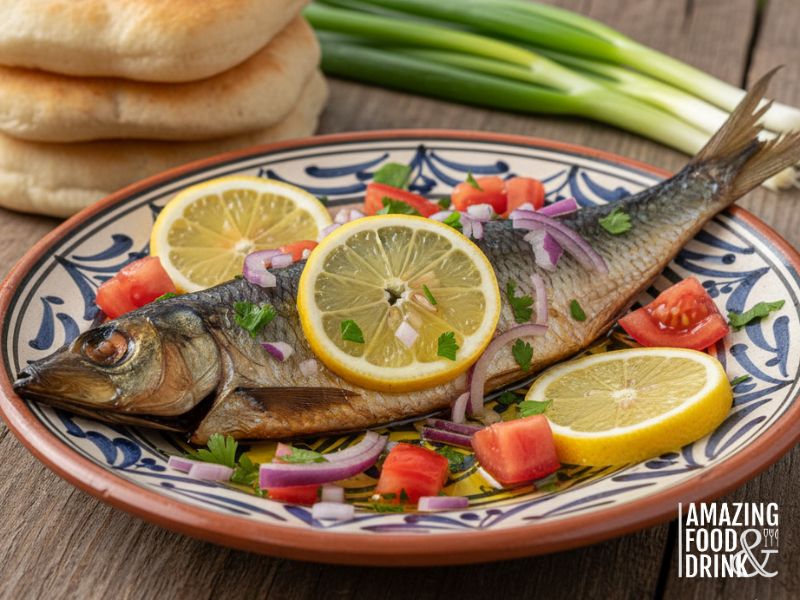
This smoked herring offers a more approachable entry into Egyptian Easter food traditions. For those finding feseekh too adventurous, renga provides similar salty, fishy flavours with smoky complexity. Among Egyptian Easter foods, renga is often considered the safer, more accessible option for first-time celebrants. Preparation requires just two to three days. Fresh herring is split lengthwise, heavily salted, then hung to air-dry before being smoked over oak wood, creating its distinctive golden-brown colour and aromatic flavour.
This traditional Egyptian dish benefits from Egypt’s access to Mediterranean and Red Sea herring populations. (Renga may be a slightly newer addition than feseekh, but it is still deeply traditional.) The fish’s natural oiliness makes it particularly suited to smoking, producing a rich, moist texture despite preservation.
Serving tradition: Renga is served whole or in large pieces, accompanied by tahini sauce. The creamy, nutty tahini beautifully complements the fish’s smoky intensity. Many Egyptians enjoy renga with fresh baladi bread, wrapping chunks of fish with tahini and vegetables.
3. Coloured Eggs (Beid Moulwan)
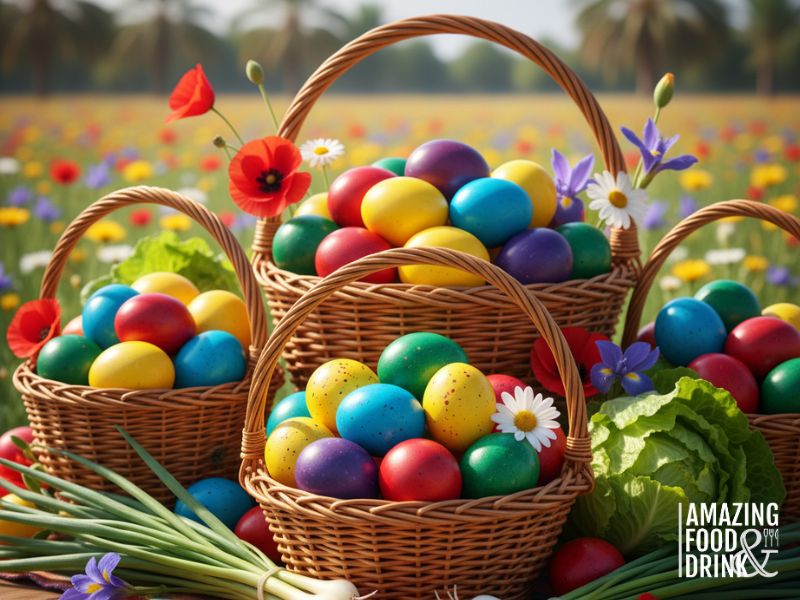
Brilliantly coloured hard-boiled eggs bridge ancient Pharaonic symbolism with contemporary Easter customs. No Egyptian Easter celebration would be complete without coloured eggs adorning every table. Among all Egyptian Easter foods, eggs hold perhaps the most universal appeal across generations. Eggs held profound significance in Ancient Egyptian culture, symbolising creation, rebirth, and the sun god Ra’s daily resurrection.
These beliefs made eggs essential offerings during the Feast of Shemu, establishing their place in Sham El Nessim traditions. When Christianity arrived in Egypt, the egg’s symbolism aligned perfectly with Easter’s themes of resurrection and new life.
The colouring tradition: Egyptian families, particularly children, eagerly decorate hard-boiled eggs in the days before Sham El Nessim. Traditional methods use natural dyes from onion skins (producing warm browns and reds), beetroot (creating pinks and purples), and turmeric (yielding golden yellows). Contemporary Egyptian Easter eggs feature intricate painted designs, geometric patterns inspired by Islamic art, and miniature Pharaonic symbols.
Beyond symbolic importance, coloured eggs serve practical purposes during long outdoor celebrations. They’re portable, protein-rich, and require no refrigeration. Children particularly enjoy the egg-tapping game, where two people knock their eggs together, and whoever’s egg remains uncracked wins.
4. Green Onions (Basal Akhdar)
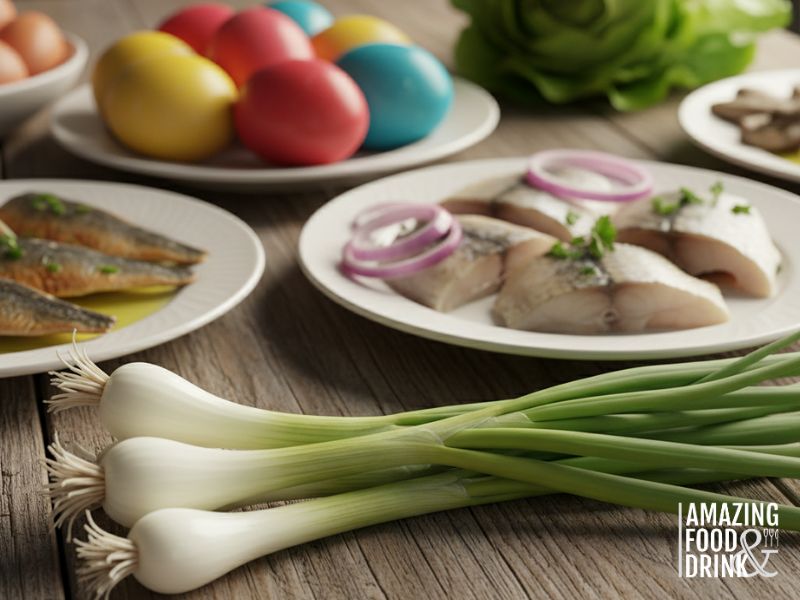
Fresh, crisp green onions hold an essential status amongst Egyptian Easter foods. Green onions aren’t merely garnishes; they’re consumed in impressive quantities during Sham El Nessim. As one of the most important Egyptian Easter foods, tradition dictates eating them raw, whole, and frequently, alongside every bite of feseekh or renga. The sharp, pungent crunch provides essential contrast to rich, salty fish whilst supposedly offering health benefits.
Ancient Egyptian beliefs: Pharaohs considered onions sacred, associating their concentric rings with eternal life. Onions appear in Ancient Egyptian art, tomb paintings, and even as burial offerings. During the Feast of Shemu, consuming raw onions was believed to purify the body and protect against seasonal illnesses, a practice maintained for over four millennia.
Modern science somewhat supports this ancient wisdom. Onions contain powerful antimicrobial compounds and vitamins that may boost immunity during seasonal transitions.
Serving tradition: Green onions are served whole, with both white bulbs and green tops intact. Diners pull off individual stalks and eat them between bites of fish. The aromatic oils help cut through preserved seafood’s richness whilst cleansing the palate.
5. Lettuce (Khas)
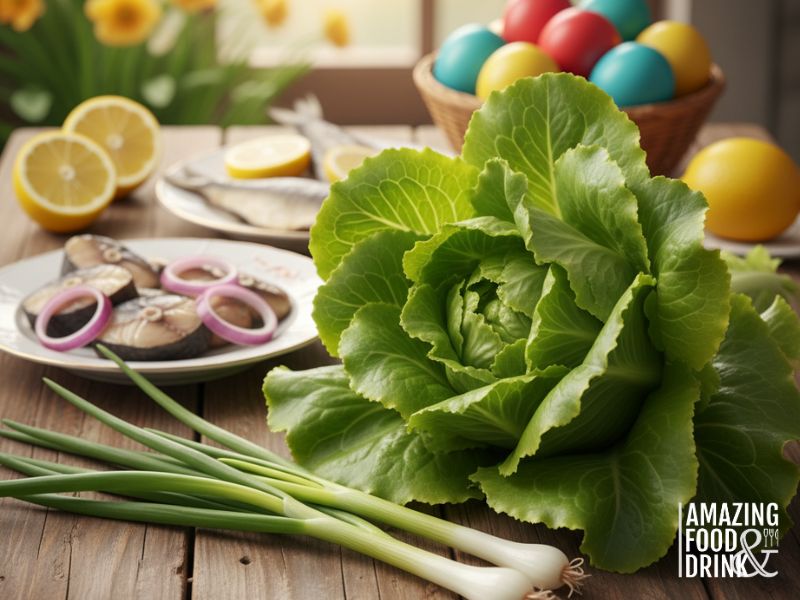
Fresh lettuce represents another ancient Egyptian tradition seamlessly continued through Sham El Nessim.
In Ancient Egypt, lettuce was associated with Min, the god of fertility and rebirth. Spring festivals honouring Min always featured lettuce offerings, establishing its place in traditional Egyptian dishes. The vegetable’s spring harvest timing made it a natural symbol of the season’s fertility and renewal.
During contemporary Sham El Nessim celebrations, whole romaine lettuce heads (khas) are served alongside preserved fish and onions. The crisp, water-rich leaves provide refreshing relief from the intense saltiness of other Egyptian Easter foods whilst adding nutritional balance. Egyptian families serve lettuce leaves whole or roughly torn, allowing diners to use them as wraps for fish or simply as palate cleansers. Beyond Pharaonic symbolism, lettuce serves practical purposes; its high water content provides hydration during all-day outdoor celebrations.
6. Tahini (Sesame Paste)
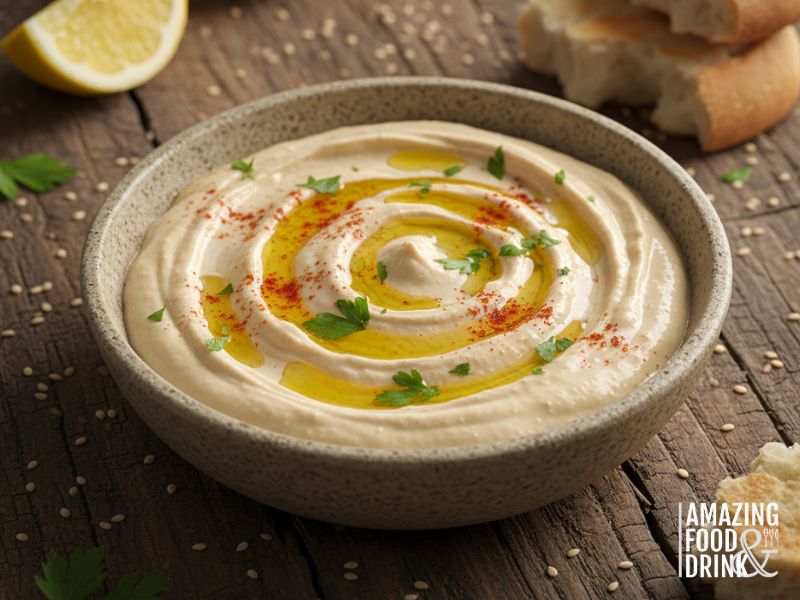
This creamy sesame paste transforms the Egyptian Easter food experience. Tahini isn’t merely a condiment during Sham El Nessim; it’s an essential component that elevates Egyptian Easter foods to new heights. Made from ground hulled sesame seeds, tahini boasts a rich, smooth texture and a subtly sweet, earthy flavour. Its oils help moderate the intense saltiness of feseekh and renga whilst adding satisfying richness to the meal.
For Sham El Nessim, tahini is typically thinned with lemon juice and water, creating a pourable sauce. Some families add minced garlic or cumin, though purists prefer simple tahini that lets the fish flavours shine. Diners drizzle tahini generously over fish or use it as a dip. The combination of smoky or fermented fish with creamy, nutty tahini creates flavour harmony synonymous with Egyptian Easter celebrations.
7. Termis (Lupini Beans)
These salted lupini beans offer a beloved vegetarian option amongst the fish-dominated feast. Termis-preserved lupini beans represent a popular Egyptian snack that appears prominently during Sham El Nessim. For vegetarians seeking authentic Egyptian Easter foods, Termis offers an ideal option.
These golden-yellow beans have been consumed in Egypt since Pharaonic times, when they served as both food and animal fodder. During spring festivals, termis represented agricultural abundance and seasonal harvest, securing their place in traditional Egyptian dishes.
Eating tradition: Termis is eaten throughout the day as a snack between main courses. The traditional method involves pinching one end to pop the bean from its skin directly into your mouth. (They are usually prepared by soaking, boiling, and then salting for several days.) Vendors sell termis from carts at parks where Egyptians gather for this Egyptian spring festival, creating a festive atmosphere.
How to Celebrate Sham El Nessim Like a True Egyptian
Experiencing Egyptian Easter foods properly requires understanding the celebration’s unique customs and atmosphere.
The authentic Sham El Nessim celebration begins before dawn. Families wake around 5:00 or 6:00 AM to prepare their traditional feast and travel to parks, gardens, or the Nile’s banks, arriving as the sun rises to literally “inhale the breeze.”
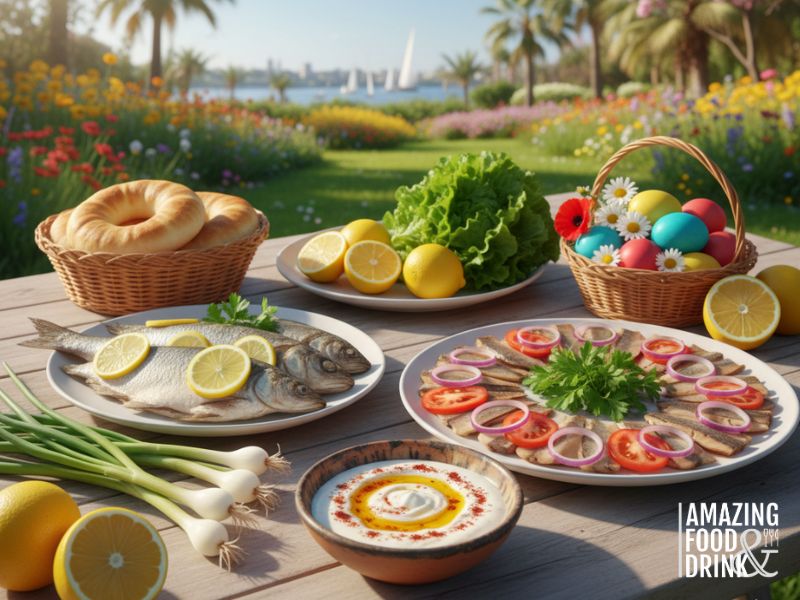
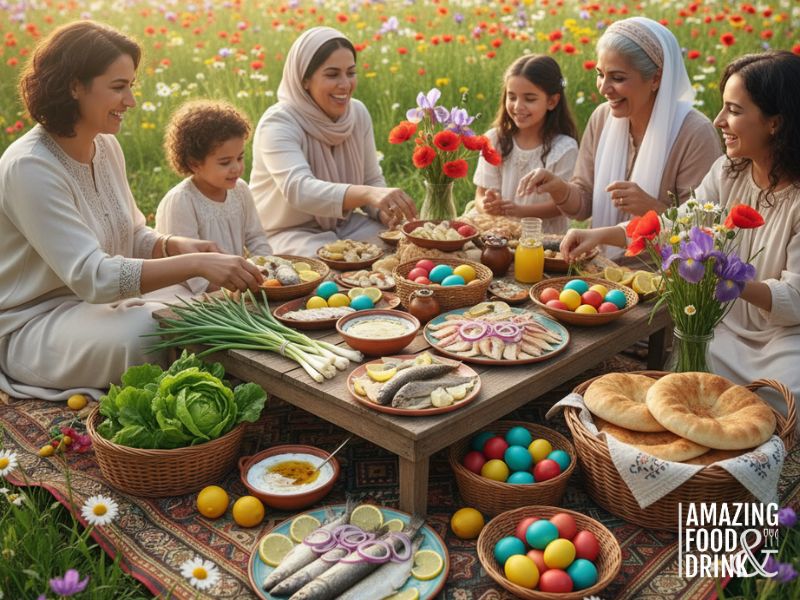
The traditional setup: Families spread large blankets on grass, unpacking elaborate spreads featuring all the Egyptian Easter foods, whole platters of feseekh and renga, mountains of green onions, lettuce heads, baskets of coloured eggs, containers of tahini, and bags of termis. Fresh baladi bread, tomatoes, cucumbers, and pickled vegetables complete the feast.
The eating ritual: Unlike rushed Western meals, Sham El Nessim dining unfolds leisurely across the entire day. Families eat slowly, conversation flowing freely, whilst children play nearby. Music accompanies celebrations, with traditional Egyptian songs adding to the festive atmosphere. Friends visit between family groups, sharing Egyptian Easter foods and swapping decorated eggs. As evening approaches, families gradually pack their belongings, the celebration traditionally continuing until sunset, making Sham El Nessim genuinely an all-day affair.
Where to Buy Traditional Egyptian Easter Foods
Finding authentic ingredients makes all the difference in experiencing genuine Sham El Nessim flavours.
In Egypt
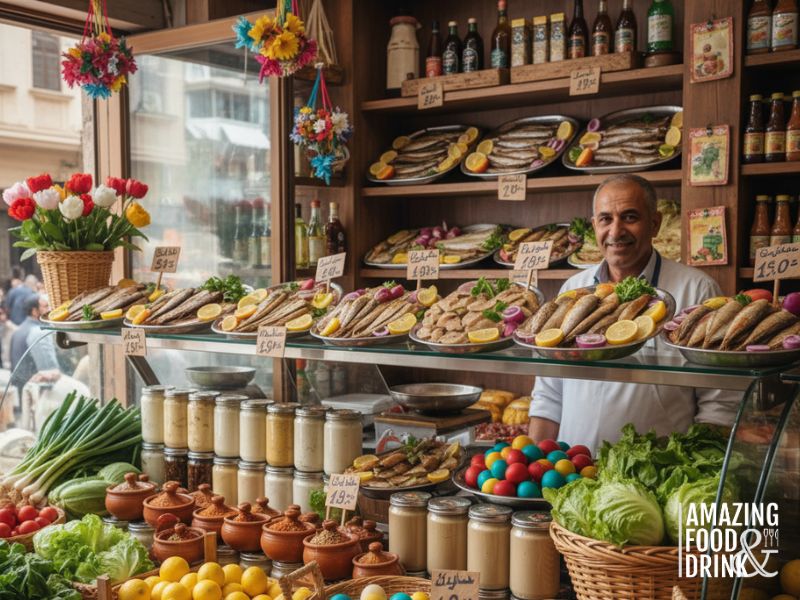
Traditional markets (souqs) throughout Egypt begin selling Egyptian Easter foods several weeks before Sham El Nessim. Cairo’s Rod El Farag and Imbaba fish markets, Alexandria’s Anfushi market, and neighbourhood souqs offer the freshest selection and most competitive prices.
For feseekh specifically, always purchase from vendors licensed by Egypt’s Food Safety Authority, look for official stamps and certificates. Reputable sellers include established families who’ve prepared feseekh for generations.
Major Egyptian supermarket chains like Carrefour, Spinneys, and Seoudi now stock pre-packaged feseekh, renga, and termis during the Easter season, offering guaranteed safety standards and convenience.
Timing: Begin shopping at least one week before Sham El Nessim. Popular vendors sell out quickly, and the best-quality fish goes first.
Outside Egypt
International cities with Egyptian or Middle Eastern communities often stock renga (smoked herring) and termis at speciality grocers. Check Lebanese, Syrian, or Persian markets if specifically Egyptian shops aren’t available. Several online Middle Eastern food retailers ship preserved fish and other Egyptian Easter foods internationally, though shipping times and regulations vary by country.
For those unable to source authentic items, smoked mackerel or kippers can substitute for renga, though feseekh has no real equivalent; it’s truly unique to Egyptian Easter traditions.
Egyptian Easter Food Safety Tips
Enjoying traditional Egyptian dishes safely requires awareness and sensible precautions, especially with preserved fish.
Feseekh Safety Guidelines
Feseekh causes dozens of hospitalisations and occasional deaths annually in Egypt, almost always from improperly prepared batches. The fermentation process can produce dangerous botulinum toxins if done incorrectly. Follow these crucial safety measures when purchasing any Egyptian Easter foods:
Purchase only from licensed, reputable vendors: Don’t buy from unlicensed street vendors or unknown sources. Established sellers with health certificates and good reputations are essential.
Check for warning signs: Fresh feseekh should smell strongly fishy but not rotten or putrid. The flesh should be firm, not mushy. Excessive bloating in packaging indicates dangerous bacterial activity, which should be avoided entirely.
Refrigerate immediately: Keep feseekh continuously refrigerated until consumption. Don’t leave it at room temperature during extended outdoor celebrations.
Consume in moderation: Even properly prepared feseekh is extremely salty. Eat small portions, drink plenty of water, and avoid it entirely if you have high blood pressure or heart conditions.
Know the symptoms: If you experience dizziness, double vision, difficulty swallowing, or breathing problems within 36 hours of eating feseekh, seek immediate medical attention. These indicate potential botulism poisoning.
Consider alternatives: First-time celebrants might start with renga instead, which undergoes smoking that kills harmful bacteria, making it considerably safer.
General Food Safety
Wash raw vegetables thoroughly, particularly in Egypt, where water quality varies. During all-day celebrations, keep perishable items shaded and cool. Consider ice packs or coolers for longer preservation. Bring hand sanitiser for outdoor celebrations where handwashing facilities may be unavailable. Start with small portions of unfamiliar preserved fish, as extremely high sodium content can cause digestive upset.
Egyptian Easter foods represent far more than a yearly feast; they’re living connections to humanity’s oldest civilisation. When you enjoy feseekh, coloured eggs, or green onions during Sham El Nessim, you’re participating in traditions that Ancient Egyptians practised over 4,500 years ago, dating back to the Feast of Shemu. These traditional Egyptian Easter foods carry forward not just recipes, but stories, beliefs, and communal memories spanning millennia from the Pharaonic era to today.
Whether you’re Egyptian reconnecting with your roots, a visitor seeking authentic cultural experiences, or a food enthusiast exploring global cuisines, Egyptian Easter foods offer remarkable insight into how food preserves history. Start preparing now to experience this Egyptian spring festival. Research reputable vendors for safe feseekh, gather your ingredients, and prepare to spend a full day outdoors honouring traditions older than most modern nations.
FAQs
1. Is Sham El Nessim only for Christians in Egypt?
No, Sham El Nessim is celebrated by all Egyptians regardless of religious background. The festival’s ancient Egyptian roots predate Christianity by thousands of years. Its origins in the Pharaonic Feast of Shemu mean Muslims, Christians, and people of all faiths participate equally, making it one of Egypt’s most unifying national holidays that transcends religious boundaries. Everyone enjoys Egyptian Easter foods together during this celebration.
2. Why do Egyptians eat salted fish at Easter?
The tradition dates back to Ancient Egypt’s Feast of Shemu. Spring coincided with the Nile’s flooding season when fish populations peaked, making fish exceptionally abundant. Preserving this bounty through salting allowed year-round consumption, but eating it during the spring festival held special ceremonial significance. Ancient Egyptians also believed the strong, pungent flavours of preserved fish and raw onions protected against seasonal illnesses, beliefs maintained for over four millennia in these Egyptian Easter foods.
3. Is feseekh safe to eat?
When properly prepared by experienced, licensed vendors, feseekh is safe for consumption. However, improper preparation can produce dangerous botulinum toxins, causing serious illness or death. Only purchase from reputable, government-licensed sellers with official health certificates. Check for warning signs like rotten smell or mushy texture. If you’re new to Egyptian Easter foods, consider starting with smoked renga instead, which is considerably safer due to the smoking process that kills harmful bacteria.
4. What does Sham El Nessim mean in English?
Sham El Nessim translates to “inhaling the breeze” or “smelling the breeze” in English. This beautiful phrase perfectly captures the festival’s essence, the joy of emerging from winter’s confines to enjoy spring’s fresh outdoor air whilst feasting on traditional Egyptian dishes. The name evolved from the ancient Egyptian “Shemu” through Coptic “Shmo” to the modern Arabic “Sham El Nessim.”
5. Can vegetarians celebrate Sham El Nessim?
Absolutely! Whilst fish dominates Egyptian Easter foods, several vegetarian options exist. Coloured eggs provide protein, tempeh (lupini beans) offer a satisfying preserved food experience with similar salty flavours, and fresh vegetables, lettuce, green onions, tomatoes, and cucumbers feature prominently in traditional spreads. Tahini adds richness and nutrition. Many modern Egyptian families now include additional vegetarian dishes like falafel and hummus in their Sham El Nessim celebrations, whilst maintaining core traditions.