What is Metabolism? 12 Amazing Ways to Speed It Up

Your metabolism burns between 1,200 and 2,000 calories every single day, even while you sleep. However, here’s the challenge: starting around age 30, your metabolic rate typically decreases by 1-2% per decade, largely due to natural muscle loss. The encouraging news? You’re not powerless. Through specific foods, targeted exercises, and science-backed habits, you can take control of your metabolism and transform how your body burns energy. This comprehensive guide reveals exactly how to boost your metabolic rate naturally, maintain a healthy weight, and feel more energised throughout your day.
Table of Contents
What Does Metabolism Mean?
Understanding metabolism is the first step to harnessing its power for your health goals. The term might sound complex, but the concept is actually quite straightforward once you break it down.
Metabolism is the process your body uses to convert food and drink into energy, according to the Mayo Clinic. During this biochemical process, calories from the foods you consume combine with oxygen to release the energy your body needs to function. This energy powers everything from breathing and circulating blood to digesting food and repairing tissues.
Understanding Your Basal Metabolic Rate (BMR)
Your Basal Metabolic Rate, or BMR, represents the number of calories your body needs to maintain basic life functions whilst at complete rest. Remarkably, your BMR accounts for approximately 60-75% of your total daily energy expenditure.
How to Calculate Your BMR:
The Mifflin-St Jeor equation is the most accurate formula:
For Men: BMR = (10 × weight in kg) + (6.25 × height in cm) – (5 × age in years) + 5
For Women: BMR = (10 × weight in kg) + (6.25 × height in cm) – (5 × age in years) – 161
Example: A 35-year-old woman who weighs 70kg and is 165cm tall: BMR = 1,401 calories per day
Several factors influence your BMR, including weight, muscle mass, sex, age, and genetics. Muscle tissue burns approximately 6 calories per pound per day at rest, whilst fat burns about 2 to 4 calories per pound, which is why building muscle is crucial for boosting metabolism.
How Does Metabolism Affect Weight Loss?
The relationship between metabolism and weight management is one of the most misunderstood aspects of health and fitness. Let’s clarify exactly how your metabolic rate influences your ability to lose, maintain, or gain weight.
Your total daily energy expenditure (TDEE) consists of three components: your basal metabolic rate (BMR, 60-75%), the thermic effect of food (TEF, 10%), and physical activity (15-30%). Weight management fundamentally comes down to the balance between calories consumed and calories burned. A faster metabolism means your body burns more calories at rest, making it easier to create the calorie deficit needed for weight loss.
However, metabolism is rarely the sole culprit in weight struggles. Research shows that metabolic differences between individuals typically account for fewer than 200 calories per day. The real factors affecting weight often include portion sizes, physical activity levels, sleep quality, stress levels, underlying medical conditions, medications, and hormonal changes.
Does Metabolism Change with Age?
Yes, metabolism absolutely changes as you age. Your BMR decreases by approximately 1-2% every decade after age 30, according to the American Council on Exercise. By age 60, you could be burning 200-300 fewer calories per day than you did at age 20.
This occurs due to muscle loss (sarcopenia), hormonal changes, decreased physical activity, and shifts in body composition. The encouraging news is that adults who maintain regular strength training and stay physically active can preserve much of their muscle mass and metabolic rate well into their 70s and beyond.
Can You Actually Speed Up Your Metabolism?
This is perhaps the most common question about metabolism, and the answer is a resounding yes, but with realistic expectations.
Research demonstrates that combining strength training, strategic eating patterns, and specific lifestyle habits can increase your metabolic rate by 5-15%, resulting in the burning of an additional 100-300 calories per day. The key is understanding that “boosting metabolism” isn’t about quick fixes or magic pills; it’s about making sustainable changes that support your body’s natural energy-burning processes.
12 Proven Ways to Boost Your Metabolism Naturally

Now let’s explore the most effective, science-backed strategies for enhancing your metabolic rate. These methods work synergistically, so incorporating several of them into your routine will yield the best results.
1. Strength Training Exercises for Metabolism
Strength training is the single most effective tool for boosting your metabolism in the long term. When you build muscle, you’re essentially installing calorie-burning machinery that works 24 hours a day.
For every pound of muscle you add, your body burns an additional 6 calories per day just to maintain it. Gaining 5 pounds of muscle means burning an extra 30 calories daily, which adds up to over 10,000 calories per year, equivalent to about 3 pounds of fat.
Getting Started:
- Bodyweight exercises: Squats, press-ups, lunges, planks (3 sets of 10-15 reps)
- Free weights: Bicep curls, shoulder presses, deadlifts (3 sets of 8-12 reps)
- Frequency: 2-3 days per week with rest days between sessions
2. Best Cardiovascular Exercise for High Metabolism
Cardiovascular exercise provides an immediate boost to your metabolism during the activity and for several hours afterwards, known as excess post-exercise oxygen consumption (EPOC) or the “afterburn effect.”
Effective options include:
- Brisk walking, cycling, swimming, rowing, dancing
- HIIT: Short bursts of intense exercise (30 seconds) followed by recovery (60-90 seconds), repeated 8-10 times
Aim for at least 150 minutes of moderate-intensity cardio or 75 minutes of vigorous cardio per week, as recommended by the NHS.
3. Metabolism-Boosting Foods to Add to Your Diet
Certain foods have a higher thermic effect, meaning your body burns more calories digesting them. Protein has the highest thermic effect; your body uses 20-30% of the calories from protein just to digest it, compared to 5-10% for carbohydrates and 0-3% for fats.
Best protein sources:
- Lean meats (chicken, turkey), fish (salmon, tuna), eggs, Greek yoghurt, legumes, quinoa
Metabolism-boosting fruits and vegetables:
- Berries: Rich in antioxidants and fibre, they may prevent fat cell enlargement
- Broccoli: High in fibre and calcium for fat metabolism
- Leafy greens: Provide iron for oxygen transport to muscles
- Chilli peppers: Contain capsaicin, temporarily increasing metabolism by 5-10%
Spices Such as Ginger, cinnamon, turmeric, and garlic all support metabolic function.
4. When to Eat for Optimal Metabolic Function
The timing and frequency of your meals significantly impact your metabolic rate. The process of eating and digesting food uses approximately 10% of your daily energy expenditure. By eating smaller, more frequent meals (every 2-4 hours), you maintain this elevated metabolic state throughout the day.
Never skip breakfast, it “breaks the fast” and jump-starts metabolism. Research shows that individuals who skip breakfast tend to consume more calories later, have poorer blood sugar control, and experience a slightly slower metabolic rate.
5. How Much Protein You Need
Protein is the most metabolism-friendly macronutrient. Ensure adequate intake to maintain and build muscle mass whilst supporting overall metabolic health.
Daily requirements:
- Sedentary adults: 0.8-1.0g per kg of body weight
- Moderately active: 1.0-1.5g per kg
- Very active or strength training: 1.6-2.2g per kg
Distribute protein evenly across meals, aiming for 20-30g per meal to optimise muscle protein synthesis.
6. The Role of Sleep in Metabolic Health
Poor sleep is one of the most commonly overlooked factors contributing to metabolic dysfunction. Insufficient sleep alters hunger hormones; ghrelin increases by up to 28% whilst leptin decreases by 18%, making you hungrier and less satisfied after eating. Sleep deprivation can also reduce insulin sensitivity by up to 30% and raise cortisol levels, promoting fat storage.
Optimal sleep for metabolism:
- Duration: 7-9 hours per night
- Consistency: Similar bedtimes and wake times daily
- Quality: Dark, cool (16-19°C), quiet environment
- Avoid screens 1-2 hours before bed and limit caffeine after 2 PM
Studies show that adults who sleep fewer than 7 hours per night are 55% more likely to become obese than those who sleep 7-9 hours.
7. Hydration and Metabolism
Water is essential for virtually every metabolic process. Drinking 500ml of cold water can increase metabolic rate by 10-30% for about an hour, as your body expends energy warming it to body temperature. Water is also necessary for lipolysis, the process of breaking down fats.
Aim for 2-3 litres daily, adjusted for exercise, climate, and body size. Drink a large glass upon waking, keep water accessible throughout the day, and monitor urine colour (pale yellow indicates good hydration).
8. Green Tea and Metabolism-Boosting Drinks
Green tea contains both caffeine and catechins (particularly EGCG), which may increase metabolism and fat burning. Drinking 2-3 cups daily can increase metabolism by approximately 4-5% and fat burning by 10-16%.
Coffee’s caffeine can boost metabolism by 3-11%, with effects lasting several hours. Limit your daily caffeine intake to 400mg. These beverages provide modest, temporary boosts as supplements, not replacements, for a healthy diet and exercise routine.
9. Manage Stress and Cortisol Levels
Chronic stress wreaks havoc on your metabolism through persistent cortisol elevation. When stressed, cortisol increases appetite for high-calorie foods, promotes fat storage (especially around organs), breaks down muscle tissue, disrupts sleep, and reduces thyroid function.
Stress-management strategies:
- Meditation and mindfulness (10-15 minutes daily)
- Regular exercise
- Adequate sleep (7-9 hours)
- Deep breathing exercises
- Limit caffeine and alcohol
Research from Ohio State University found that stressed women burned 104 fewer calories after eating a high-fat meal, which is equivalent to adding 11 pounds per year.
10. Avoid Extreme Calorie Restriction
While creating a calorie deficit is necessary for weight loss, severely restricting calories (below 1,200 for women or 1,500 for men) can backfire by dramatically slowing your metabolism. Your body perceives famine and reduces BMR by up to 20-30%, breaks down muscle, and slows thyroid function.
For sustainable weight loss, create a deficit of 300-500 calories below your TDEE, never eating fewer calories than your BMR. Aim to lose 0.5-1kg per week.
11. Increase Non-Exercise Activity Thermogenesis (NEAT)
NEAT refers to all calories burned through daily activities outside of formal exercise. Research shows NEAT can vary by as much as 2,000 calories per day between individuals.
Ways to increase NEAT:
- Take the stairs instead of the lifts
- Use a standing desk
- Walk during phone calls
- Park further from the entrances
- Do vigorous housework
- Take post-meal walks
- Get off public transport one stop early
Increasing NEAT by just 200-300 calories daily can make a significant difference in weight management over time.
12. Consider Intermittent Fasting (With Caution)
Intermittent fasting (IF) involves cycling between periods of eating and fasting. Whilst it doesn’t inherently boost metabolism, it can support metabolic health when done correctly by improving insulin sensitivity and making calorie control easier.
Popular methods include:
- 16:8 Method: Fast for 16 hours, eat within an 8-hour window
- 5:2 Diet: Eat normally 5 days, restrict to 500-600 calories on 2 days
IF isn’t suitable for everyone. Avoid it if you have a history of disordered eating, are pregnant/breastfeeding, have diabetes, or experience negative effects like extreme fatigue.
Metabolism-Boosting Foods: Complete Guide
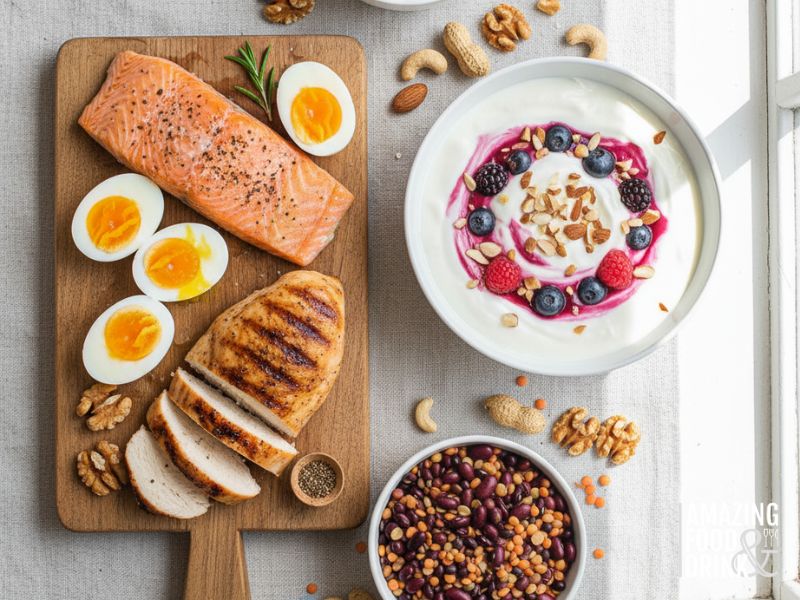
Let’s explore specific foods and how to incorporate them into your daily diet for maximum metabolic benefit.
Best Protein-Rich Foods
- Eggs: Complete protein with all nine essential amino acids. Two large eggs provide about 12g of protein with only 140 calories.
- Greek Yoghurt: Contains 15-20g protein per 170g serving plus probiotics for gut health.
- Salmon: Provides 20-25g of protein per 100g serving, plus omega-3 fatty acids for optimal metabolic health.
- Lentils and Beans: Plant-based proteins providing both protein (15-18g per cup cooked) and fibre (15-16g per cup).
- Chicken Breast: Lean protein providing about 31g of protein per 100g with minimal fat.
Metabolism-Boosting Drinks
- Green Tea: 2-3 cups daily between meals, steeped for 3-5 minutes
- Black Coffee: 1-2 cups in the morning, avoiding after 2 PM
- Cold Water: 500ml upon waking and before each meal
Metabolism-Boosting Meal Plan (Sample Day)
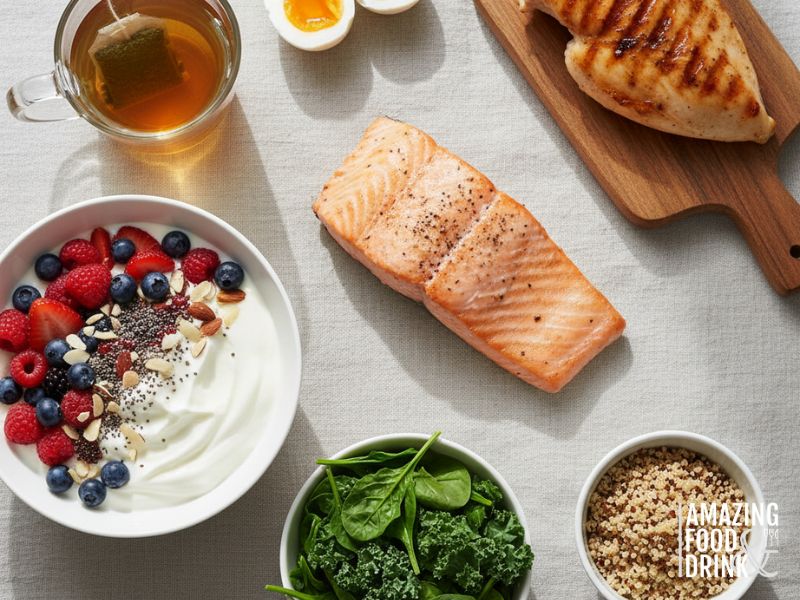
Implementing these metabolism-boosting strategies is easier than you might think. Here’s a sample day that demonstrates how to incorporate regular meals, adequate protein distribution, and metabolism-supporting foods into your daily routine. This plan provides balanced nutrition whilst keeping your metabolic rate elevated throughout the day.
Breakfast (7:30 AM): Scrambled eggs with spinach, wholegrain toast, green tea Calories: ~350 | Protein: 25g
Mid-Morning Snack (10:30 AM): Greek yoghurt with mixed berries and almonds Calories: ~220 | Protein: 18g
Lunch (1:00 PM): Grilled chicken salad with chickpeas and olive oil dressing. Calories: ~450 | Protein: 40g
Afternoon Snack (4:00 PM): Apple with almond butter, green tea Calories: ~240 | Protein: 7g
Dinner (7:00 PM): Baked salmon with broccoli and quinoa Calories: ~520 | Protein: 45g
Daily Totals: ~1,780 calories | 135g protein
Common Metabolism Myths Debunked

Understanding what doesn’t work is just as important as knowing what does.
Myth 1: “Eating Late at Night Slows Your Metabolism” Your metabolism doesn’t shut down at night. What matters is your total daily calorie intake, not the timing of your meals.
Myth 2: “Metabolism Pills Are Effective” Most over-the-counter “metabolism boosters” are ineffective, overpriced, or potentially dangerous. Focus on proven strategies, such as strength training and consuming a sufficient amount of protein.
Myth 3: “Your Metabolism is Entirely Genetic” Whilst genetics play a role (20-30% of variation), lifestyle factors have a far greater impact.
Myth 4: “You Need to ‘Detox’ to Reset Your Metabolism” Your liver and kidneys naturally detoxify your body. Juice cleanses often cause muscle loss and metabolic slowdown due to inadequate protein and calories.
When to See a Doctor About Your Metabolism

Whilst lifestyle changes effectively support metabolism for most people, certain symptoms warrant medical evaluation to rule out metabolic disorders.
Consult your GP if you experience:
- Unexplained weight changes
- Persistent fatigue despite adequate sleep
- Feeling cold all the time
- Hair loss or thinning
- Muscle weakness or cramps
- Persistent constipation
Common metabolic disorders include: Hypothyroidism, hyperthyroidism, PCOS, Cushing’s syndrome, and metabolic syndrome. Many conditions can be managed with medication and lifestyle modifications.
Your metabolism is a dynamic system influenced by your daily choices and lifestyle. Whilst you cannot override genetics or stop ageing, you can optimise your metabolic rate through strength training, adequate protein, proper hydration, quality sleep, and regular activity. Start with one or two manageable changes, then gradually build new habits. If you experience unexplained symptoms despite lifestyle improvements, consult your GP to rule out metabolic disorders. Your metabolism is a powerful ally; make it work harder for you, one healthy choice at a time.
FAQs
1. Can you actually speed up your metabolism?
Yes, you can increase your metabolic rate through strength training, adequate protein intake, staying well-hydrated, getting quality sleep, and maintaining regular physical activity. These strategies can boost metabolism by 5-15%, translating to an additional 100-300 calories burned daily. However, changes take consistency and time; there are no overnight fixes.
2. What foods slow down metabolism?
Highly processed foods, excessive alcohol, sugary drinks, and refined carbohydrates can negatively impact metabolism by causing blood sugar spikes and insulin resistance. Additionally, severe calorie restriction and skipping meals signal your body to conserve energy, slowing metabolic rate. Focus on whole, unprocessed foods and regular eating patterns for optimal metabolic function.
3. Does drinking water boost metabolism?
Yes, drinking water does provide a modest metabolic boost. Consuming 500ml of cold water can increase metabolism by 10-30% for approximately one hour. Additionally, proper hydration is crucial for all metabolic processes, including the breakdown of fat. Aim for 2-3 litres of water daily, more if you are exercising or in hot weather.
4. How much does muscle increase metabolism?
Each pound (0.45kg) of muscle tissue burns approximately 6 calories per day at rest, compared to just 2 to 4 calories for fat. While this might seem small, gaining 5 pounds of muscle increases your resting metabolic rate by about 30 calories per day, equivalent to approximately 10,000 calories per year. More importantly, muscle allows you to exercise harder and longer, significantly increasing total calorie burn.
5. Does metabolism slow down after 30?
Yes, metabolism typically decreases by 1-2% per decade after the age of 30, primarily due to muscle loss, decreased physical activity, and hormonal changes. However, this slowdown isn’t inevitable. Adults who maintain regular strength training and stay physically active can preserve much of their metabolic rate. The “slowing metabolism” often attributed to age is frequently more about lifestyle changes than biological inevitability.